
In recent years some investors hit the same wall on offshore platforms: accounts restricted, withdrawals frozen — assets visible but immovable for months. The first instinct is to bombard support with "this is my own money, please release it". In practice this achieves little and sometimes pushes the account into stricter re-review.
From Delta & Capital's casework, the correct order after a freeze is think first, then act: fix the evidence, characterize the freeze, rebuild materials along compliance logic, and control the narrative. Point by point:
1. Fix the evidence first — don't rush to appeal
Preserve everything tied to the account: UID, asset screenshots, the platform's risk notices, ticket numbers and replies, related emails, and the on-chain addresses involved. Scattered evidence and shifting stories are the classic reason platforms stall re-reviews.
2. Determine the freeze's real nature
Restrictions have very different causes: ordinary platform risk control? questioned fund sources? or an offshore law-enforcement inquiry? Each demands a different response. Handling a mistaken freeze and an inquiry case with the same script usually backfires.
3. Prepare materials around the platform's compliance logic
What the platform needs is not an emotional appeal but a reviewable evidence chain: identity (KYC), source-of-funds statements (SOF/SOW), on-chain address ownership, and transaction background. Who owns the account, where the money came from, who controls each address, and why each trade happened must all corroborate one another.
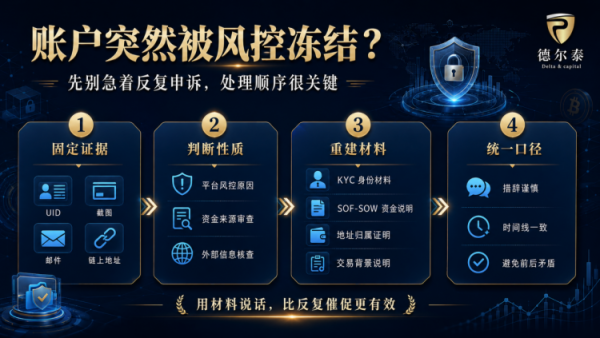
4. Watch your wording — don't talk the risk bigger
When an account touches an external inquiry or carries a high-risk on-chain label, wrong wording can saddle you with liability beyond the facts. Neither blanket denial nor over-admission helps; confine the issue to the on-chain path under review and let materials, not rhetoric, state the facts.
5. Bring in professionals when needed
Complex freeze cases span compliance review, on-chain analysis, and cross-border communication — beyond most users' reach. A team with both compliance and on-chain analysis capability is the safer route.
6. A de-identified case
An investor had about US$154,000 stuck in a platform account flagged as a security risk. Worse, tickets showed an offshore law-enforcement inquiry, and later communications surfaced a high-risk on-chain label — far beyond an ordinary mistaken freeze. A previously engaged team, lacking a platform-compliance perspective, had only made the risk team more cautious.
Delta & Capital's approach: stop pressing the platform and re-characterize the case, advancing on parallel tracks — steady ticket follow-up, disciplined wording in cross-border emails, and a fresh mapping of addresses and fund sources. Around the platform's review logic, UID, account assets, on-chain addresses, fund flows, identity papers, and trading background were re-woven into one reviewable evidence chain, with strict control over how sensitive labels were addressed.
After several rounds of reinforcement and re-review, withdrawals were restored: funds left in two tranches totaling about 154,000 USDT, verifiable via withdrawal records and transaction IDs. Details are anonymized and illustrate method only — identical outcomes are not implied for similar cases.
7. Summary
A frozen account is not the disaster — the wrong method is, digging you in deeper with every move. Fix evidence, characterize the freeze, and prepare materials along compliance logic: this beats repeated appeals. For complex cases involving offshore inquiries or large assets, seek professional help.
8. Key concepts at a glance
- Platform risk-control freeze vs. judicial freeze: the former is an exchange's compliance restriction, the latter is initiated by judicial authorities — completely different handling paths. Identify the type before acting.
- Source-of-funds statement (SOF/SOW): explain where funds came from, over which period, and whether they reconcile with account assets and on-chain paths.
- On-chain address ownership: separate addresses you control from platform or counterparty addresses; blind claiming creates secondary risk.
- Offshore law-enforcement inquiry: restrictions may stem from cross-border investigation requests — more complex than a mistaken freeze; let materials, not rhetoric, state the facts.
9. FAQ
Q1: Does repeatedly contacting support and appealing help?
Marginally. Platforms need reviewable evidence, not emotional statements; repeated filings can push the account into stricter re-review.
Q2: What is the first step after a freeze?
Fix the evidence: UID, asset screenshots, risk notices, tickets and emails, the on-chain addresses involved; then characterize the freeze; then prepare materials along compliance logic.
Q3: The account involves an offshore inquiry — can it still be released?
Possible, but harder. The keys are explaining identity, fund sources, address ownership, and trading background with materials, while strictly controlling wording. Such compound cases usually need professional help, and outcomes depend on the case.
Q4: How do I pick a reliable compliance firm and avoid being scammed?
Look for genuine compliance-review perspective and on-chain analysis capability — the ability to rebuild an evidence chain around the platform's logic rather than promise outcomes. Treat any demand for a large upfront deposit or a "100% release" promise as a red flag.