
Public reporting dated July 9, 2026 described a U.S. Department of Justice anti-scam operation involving Coinbase and other private-sector participants. The reported outcome was approximately $3.8 million in scam-related crypto frozen across participants, including more than $3 million reported at Coinbase. The important operational lesson is not a promise of recovery: it is that the best intervention window is often when illicit funds reach a regulated, reachable exchange.
1. What the reported collaboration shows
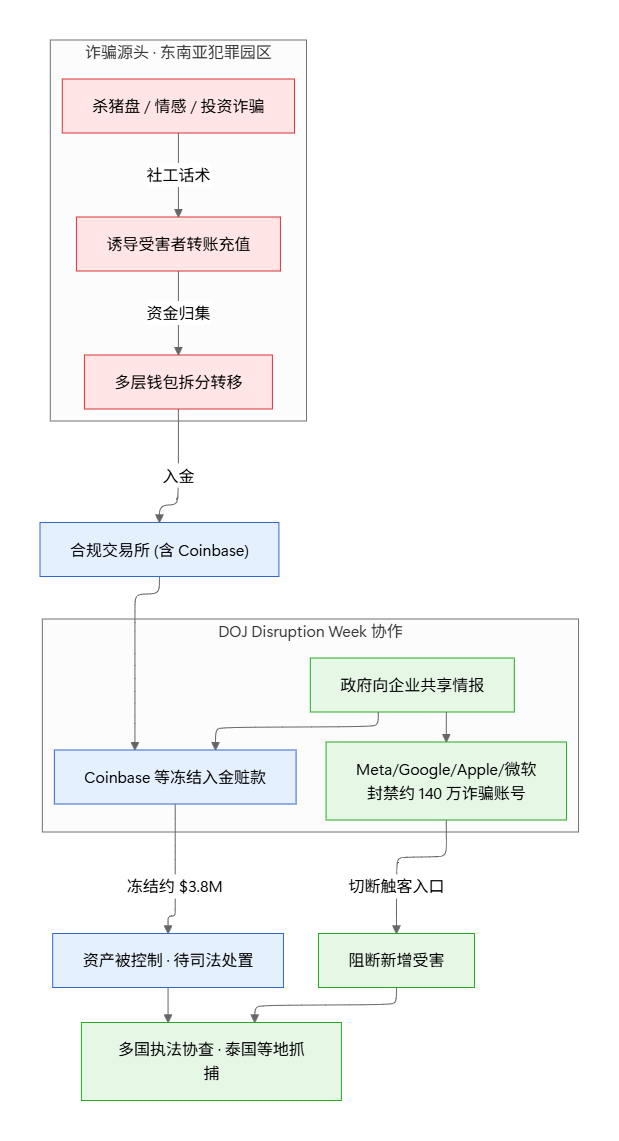
The operation was described as linking law-enforcement intelligence with voluntary platform actions such as account disruption and asset restrictions. Public reports also referenced actions against social-media and email accounts used for fraud. Amounts and arrest figures may differ across sources, so official announcements remain the controlling reference.
2. Why a compliant exchange can be a key control point
Scam proceeds often move through multiple wallets, swaps and bridges before a cash-out attempt. When funds arrive at a KYC-based exchange, they become connected to an entity that can preserve records, identify accounts and respond to lawful requests. That point can narrow the time available for a further transfer.
3. Preserve evidence immediately
Victims should retain the exact transaction hash (TxID), sending and receiving addresses, timestamps, exchange deposit history, screenshots, account notices and communications. Do not alter or delete original records. A precise, chronological evidence package is more useful to an exchange or investigator than a general description of loss.
4. Speed and scope
Crypto transfers can be split, bridged and exchanged within minutes. Reporting quickly does not guarantee a freeze, but delay can materially reduce the chance that funds are still at a reachable point. The outcome depends on where the funds are, the available evidence and the lawful actions of platforms and authorities.
5. Practical anti-scam guidance
Use strong account security, distrust unsolicited investment or recovery offers, and be especially cautious of anyone requesting an upfront fee while promising a guaranteed return or unfreeze. If a loss occurs, report through lawful channels and preserve the evidentiary trail before attempting further action.
6. Takeaway
On-chain tracing, transaction monitoring and platform cooperation can help turn fragmented records into an actionable request. They do not replace legal procedures or guarantee asset recovery, but they improve the quality and timeliness of a compliant response.