
A Gate user publicly reported that approximately $1.7 million in ETH, HSK and USDT was withdrawn from a verified account. Public reporting states that the owner later obtained formal case acceptance. This article keeps a necessary distinction in view: case acceptance initiates an investigation; it does not itself confirm that assets have been frozen or recovered.
1. What public reporting establishes
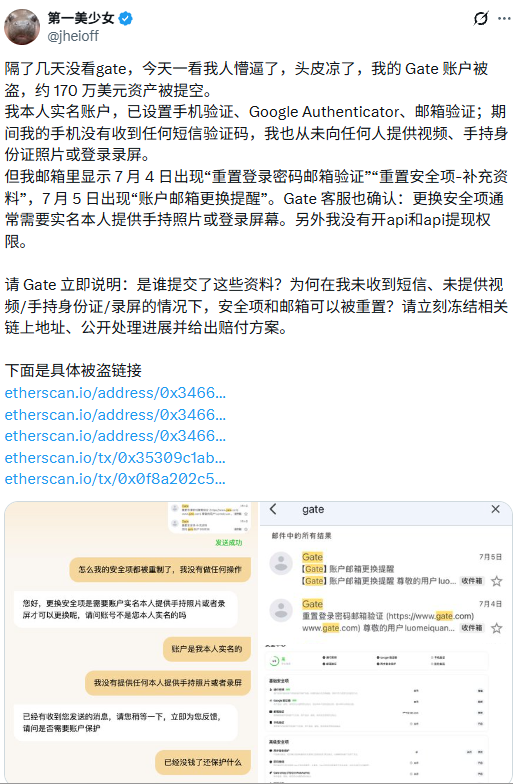
The reported loss involved 49.96 ETH, 746,475 HSK and 1,565,982 USDT, withdrawn in five transactions after a sequence of account-security changes. Third-party on-chain analysis reported that portions of the funds were consolidated at an address associated in reporting with Newpay. That observation shows where funds arrived; it is not proof that any platform planned or participated in a theft.
2. Why account verification alone is not a final defence
The public dispute centres on operations said to have passed multiple checks, including liveness verification, while the account owner disputes authorising key changes. In an environment of social engineering, SIM swaps, device compromise and AI-enabled impersonation, a successful verification record and a victim account are not by themselves a complete evidentiary answer. Account logs, device evidence, communications and the on-chain trail must be examined together.
3. The critical recovery window
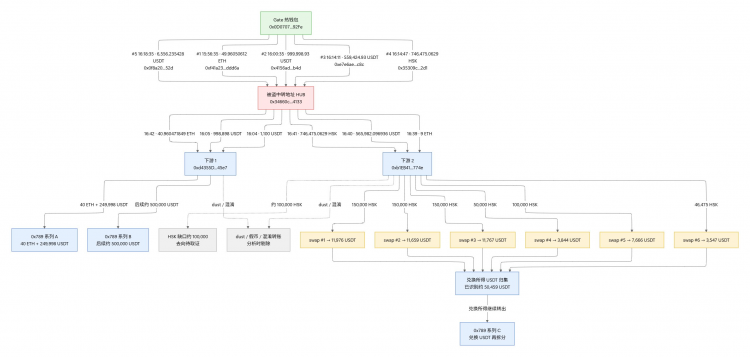
The first 24 to 72 hours matter because stablecoins and other cryptoassets can be split, bridged, swapped or sold quickly. A useful evidence package preserves withdrawal TxIDs, sending and receiving addresses, exact timestamps, account-operation logs, verification notices and relevant communications. It should be retained in original form and submitted through lawful channels to police and the affected platforms.
4. From case filing to a possible freeze

For a filing to become effective asset preservation, investigators generally need to identify the relevant accounts, preserve platform logs, establish a traceable transaction timeline and deliver valid cooperation requests to platforms or issuers. The practical question is whether assets remain at a reachable, controllable point. Neither a media report nor an initial chain trace can guarantee an outcome.
5. Forensic boundaries matter
On-chain evidence can support transaction reconstruction, address clustering and identification of likely cash-out points. It cannot alone establish a party's intent or legal liability. Statements concerning responsibility should remain subject to platform records, law-enforcement investigation and judicial findings.
6. Practical reminders
Preserve evidence rather than deleting it; report promptly; submit a coherent trace rather than isolated screenshots; and treat anyone promising a guaranteed recovery or unfreeze for an advance fee as a likely secondary-scam risk. Delta & Capital provides technical analysis and compliance-material support, not a guarantee of recovery or legal conclusions.