
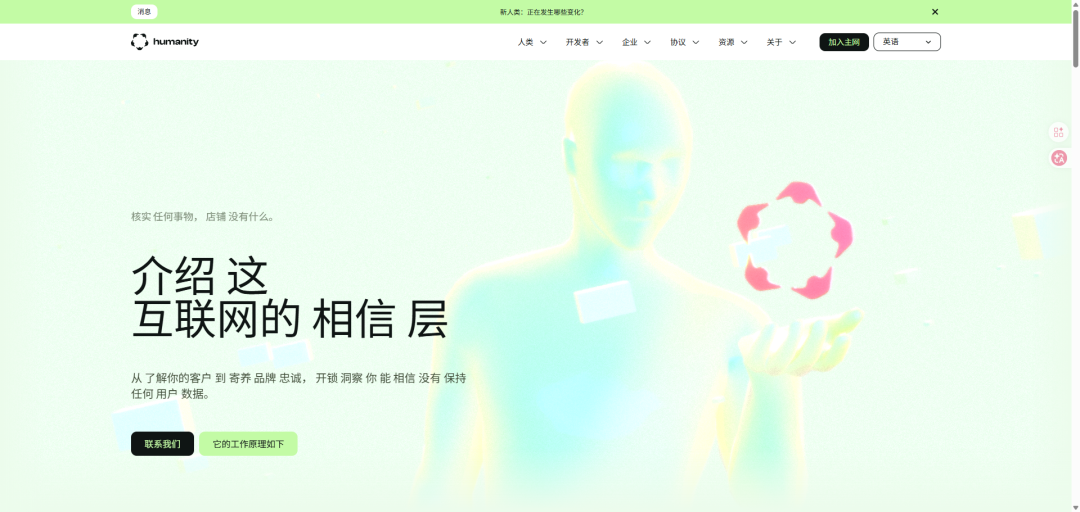
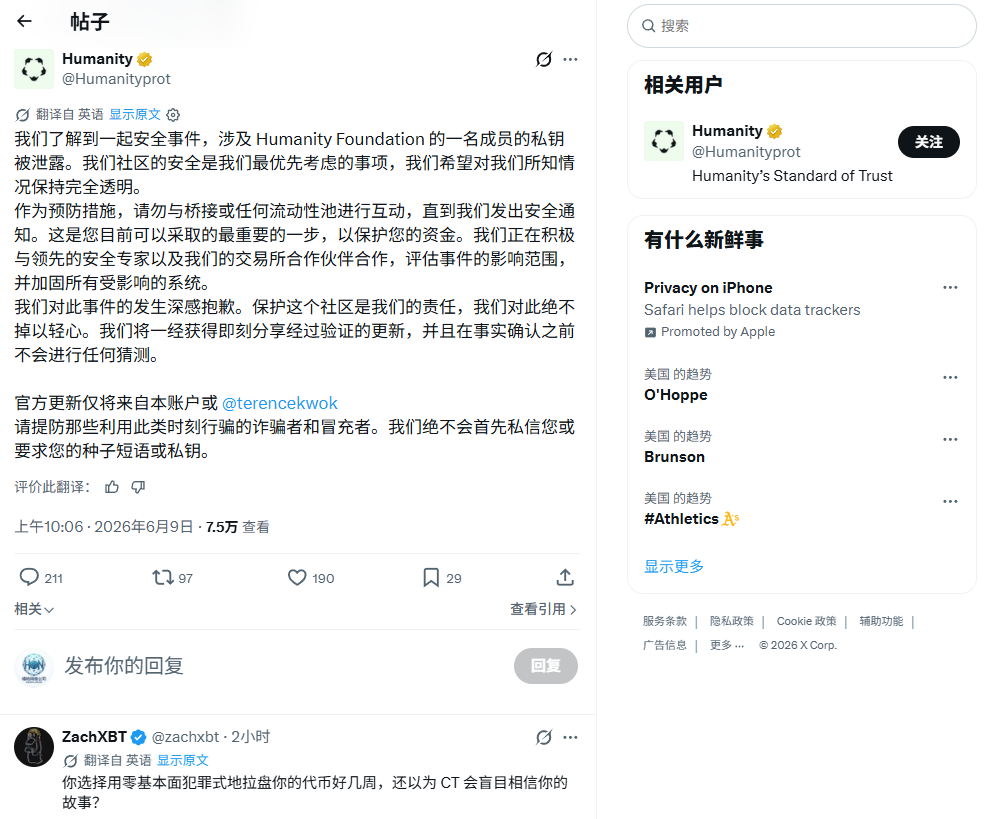
On June 9, Humanity Protocol announced that a Humanity Foundation member's private key had leaked; incident response was activated and users were told to avoid the bridge and liquidity pools for now. Markets swung violently after the announcement. As more on-chain data surfaced, discussion expanded from a pure security incident to fund flows and provenance.
1. Humanity's incident: mass H token transfers (what to do when key compromise blocks assets)
Per Humanity's disclosure, the incident involved a foundation member's leaked key. The team told users to pause bridge and pool operations and said it was investigating with security firms and exchanges. Delta & Capital's technical team then tracked that after the related wallets were attacked, roughly 187.6 million H tokens were moved out of more than 280 wallets.
For the market, the loss figure matters — but where the funds came from and how they were moved and dumped matters more. If such an incident or on-chain anomaly leaves you asking how to respond when a key compromise blocks your assets, Delta & Capital's advisors stress: affected institutions and high-net-worth individuals must preserve on-chain evidence immediately, lock down the tokens' movement paths, and rapidly notify receiving exchanges and stablecoin issuers.
2. Key addresses and flow tracking: anomalous movements (how to lift wallet address restrictions)
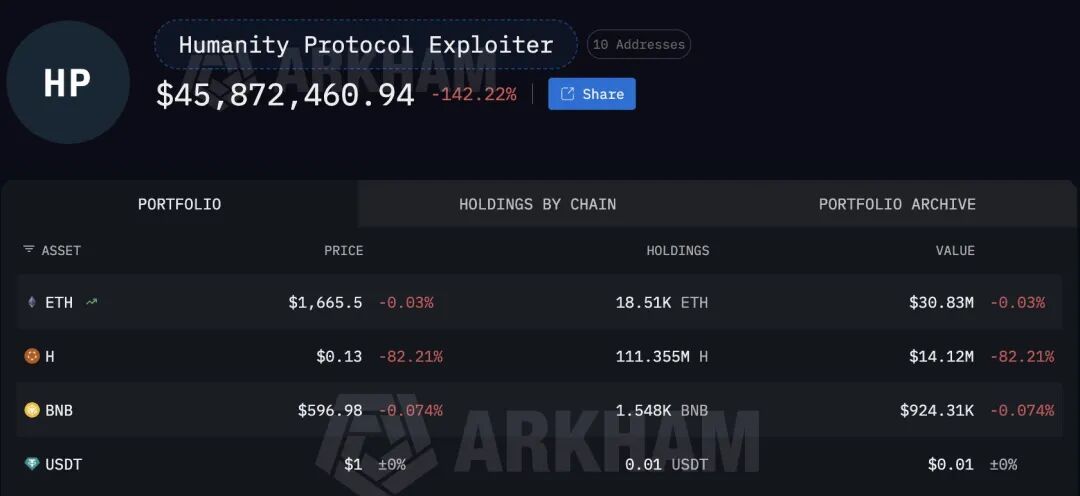
From public data, several wallets drew market attention. Address 0x44f161 was labeled Humanity-related by analytics platforms; it transferred about 141.18 million H (worth near $98M at the time) to 0xd1ea, which then distributed large amounts onward to 0x9e9959 and others.
Upstream relationships also stirred debate: some paths touched wallets with interaction history with Bybit, Gate, and KuCoin hot wallets, plus Sablier vesting addresses and bridge-style contracts. Delta & Capital's view: public data proves concentrated transfers and sustained dumping, but on-chain paths alone cannot establish the management relationships between these addresses.
3. How do keys leak? Social engineering and endpoint security (risk-controlled by Binance/OKX — what now?)
The official wording was clear: "We are aware of a security incident involving the compromised private key of a Humanity Foundation member." Rather than debating internal governance, Delta & Capital focuses on the practical question — how keys actually leak. Years of incidents show most leaks are not cryptographic breaks: attackers rarely attack the key algorithm directly, because it is technically the hardest path.
Attackers first profile the target — work habits, common software, contacts, social graph — then strike via spoofed emails, fake meeting invites, malicious plugins, counterfeit official sites, or phishing files in messengers. The victim thinks they opened a normal document while the device is already trojaned. In other cases attackers pose as partners, security teams, or exchange staff over long grooming periods.
Large projects, exchanges, and even security firms have been burned the same way. So "private key leaked" does not necessarily mean broken code — the failure often sits in endpoints, workflows, or personnel security. And if passive association with tainted addresses gets you risk-controlled by Binance/OKX, do not spam ineffective appeals that can trigger permanent restrictions. Engage professionals promptly.
4. Closing: endpoint security and privilege management set the risk ceiling
The Humanity incident remains under investigation. On-chain data shows over 187 million H moved and dumped at scale, with key addresses still being tracked. Whether this is purely a key leak or has undisclosed context awaits official clarification.
Whatever the finding, Delta & Capital sees the incident reaffirming a lasting reality: once attackers shift from smart contracts to core team members, personnel security, endpoint security, and privilege management set the project's risk ceiling. Every large on-chain movement leaves traces — but many attacks are staged off-chain long before those traces appear. The industry's only way forward is rebuilding multi-sig governance and endpoint defenses.