
Author: Delta & Capital
With fewer than three weeks until TOKEN2049 Singapore 2026 opens at Marina Bay Sands on October 7–8, the main themes are already clear: Nasdaq Chair and CEO Adena Friedman will take the main stage, while stablecoins and institutional adoption of on-chain finance feature prominently across more than 1,000 side events. Growing capital flows and institutional participation raise the requirements for source-of-funds evidence and on-chain forensics. Delta & Capital will discuss these questions at LEVEL 4 · MB4-68.
According to the conference website, TOKEN2049 Singapore 2026 will span five floors of Marina Bay Sands, with more than 25,000 attendees, over 7,000 companies from more than 160 countries and regions, 300-plus speakers and over 500 exhibitors. More than 60% of attendees are C-level executives. The announced speakers and side-event calendar suggest that capital and infrastructure, rather than narrative concepts, will dominate the agenda.
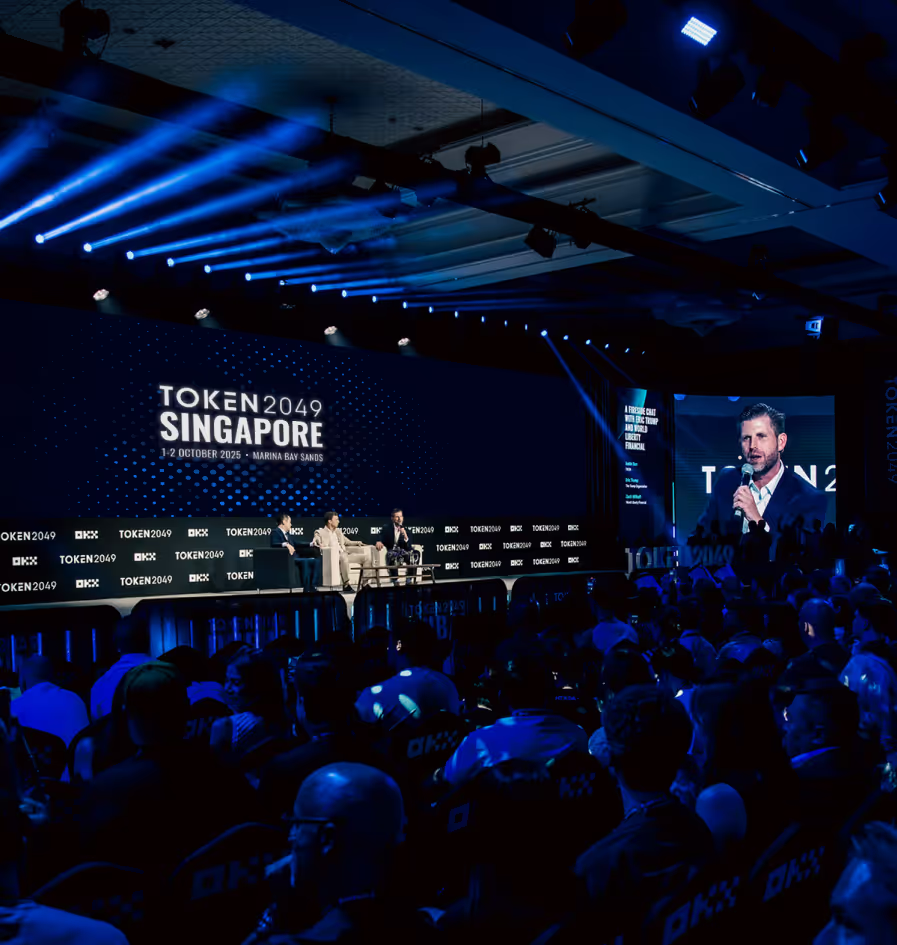
A previous TOKEN2049 Singapore conference (the photograph shows the OKX main stage in 2025)
1. Nasdaq takes the stage: traditional exchanges treat tokenization as infrastructure
Traditional financial infrastructure providers are noticeably more prominent on this year’s main stage. Confirmed speakers include Nasdaq Chair and CEO Adena Friedman and Franklin Templeton CEO Jenny Johnson. The conference’s participating-company list also includes CME Group, BlackRock, J.P. Morgan, Goldman Sachs, HSBC and Circle.
Nasdaq’s involvement is more than a gesture. According to public reporting, the U.S. Securities and Exchange Commission has approved Nasdaq’s rule proposal for trading tokenized securities. Adena Friedman describes tokenization as an evolution comparable to the move from paper share certificates to electronic shares, rather than an entirely separate financial system. For the industry, this means tokenized assets will enter existing settlement, custody and regulatory-reporting systems instead of remaining in a parallel market.
Institutional participation has a practical consequence: expectations for explaining on-chain funds will rise. Exchanges and custodians will examine not only a user’s identity, but whether the complete origin and path of their funds can be presented.
Delta & Capital already sees this shift in account-appeal support. Earlier compliance inquiries often required only an additional deposit receipt; platforms now more often ask for the full origin of funds after multiple transfers. Written assertions alone cannot answer these questions: on-chain records must be matched to supporting documents.
2. Circle and USDC: stablecoins move from payment tools to settlement infrastructure
USDC issuer Circle Internet Group made a significant move three weeks before the conference. According to Circle’s official press release, it launched the Arc mainnet on September 16, 2026, positioning it as an economic operating system for the internet, with transaction fees paid in USDC. Public reporting states that more than 100 applications and over 100 institutions and ecosystem builders were involved at launch. Circle’s website reported approximately $74.2 billion in USDC circulation as of September 14, 2026.
Stablecoins consequently take on a different role. When both a blockchain’s fees and its settlement unit are stablecoins, corporate treasury, cross-border payments and on-chain settlement naturally concentrate around such networks. For individual users and smaller institutions, this has two implications. Much of their on-chain money consists of assets with identifiable issuers and compliance obligations; those assets also allow address-level controls, making freezing or restrictions technically possible in law-enforcement or risk-review processes. This can protect victims, but an incoming transfer linked to a risky address may also require the recipient to explain the source of funds to a platform.
Delta & Capital’s experience is that screening an address before receiving funds costs much less than appealing afterwards. Once an account is flagged, the scope of the required explanation can expand from a single transaction to the entire funding chain.
3. What side events reveal: stablecoins and institutional on-chain finance dominate
The organizers say this TOKEN2049 week will include more than 1,000 side events. The official calendar, as of September 17, shows a clear concentration of themes:
| Date | Selected side event | Type |
|---|---|---|
| October 6 | Institutional Onchain Finance Summit 2026, covering financial institutions, stablecoins and digital-asset infrastructure | Summit |
| October 6–7 | TOKEN2049 Origins Hackathon, a 36-hour hackathon | Hackathon |
| October 6 | Stablecoins: from Tokens to Rails, in a debate format | Summit |
| October 7 | Digital Asset Summit Asia 2026 | Summit |
| October 7 | The Capital Summit x Asia Stablecoin Conference | Summit |
| October 8 | Stablecoin Summit | Summit |
| October 8 | The Treasury Table, stablecoins and payments for CFOs | Summit |
| October 9 | The Institutional Table, a private dinner on tokenization and stablecoins | Dinner |
| October 9 | AFTER 2049 official closing party, Marina Bay Sands SkyPark | Party |
The list is itself a gauge of the industry. Last year’s discussion asked whether stablecoins could be used for payments; this year’s event names already refer directly to corporate treasury, settlement rails and institutional adoption.
The official AFTER 2049 closing party is scheduled for October 9 at Marina Bay Sands SkyPark, with Claptone and Crusy among the performers. The first ticket round is sold out and the second opens on September 24. The conference also includes the Nexus startup competition. A dense event calendar also creates more opportunities for risk, as discussed in Section 5. During conference week, Delta & Capital will join discussions on stablecoins and institutional on-chain finance, focusing on incoming-funds risk controls, account appeals and on-chain forensics.
4. What institutionalization means for accounts
These themes may sound abstract, but their consequences for individuals and smaller institutions are concrete: stricter risk controls and higher evidentiary requirements.
| Trend | Practical effect on accounts and funds | Materials to prepare |
|---|---|---|
| Tokenized assets enter traditional settlement systems | Deposit and withdrawal paths face stricter reporting and audit requirements | Complete transaction timelines and counterparty records |
| Stablecoins become a principal settlement unit | A single receipt from a risky address can affect an entire account’s rating | Address-risk screening records created before receipt |
| Exchanges and custodians raise compliance requirements | Source-of-funds explanations move from statements to evidence | Correspondence between SOW materials and on-chain records |
| Issuers can apply address-level controls | Funds can be frozen or restricted, affecting both victims and ordinary users | Official case-reporting records and platform support tickets after an incident |
| Prediction markets and other new models enter regulatory scrutiny | Unusual-trading timelines and fund paths become review priorities | Complete records of position-entry times, funding sources and withdrawal paths |

Address clustering and fund-relationship analysis: reconstructing paths and assessing account consolidation are foundations for both evidence and risk controls
Prediction markets are a recent example of this logic. Polymarket founder Shayne Coplan will have a fireside conversation with Balaji Srinivasan on October 7, from 9:30 to 10:00. Separately, WIRED reported, based on documents obtained under the U.S. Freedom of Information Act, that the CFTC had initiated at least three previously undisclosed investigations. One involving contracts on Google’s 2025 annual search rankings entered civil litigation and parallel criminal proceedings on May 27, 2026. An investigation or charge does not establish a violation; final findings remain for the courts.
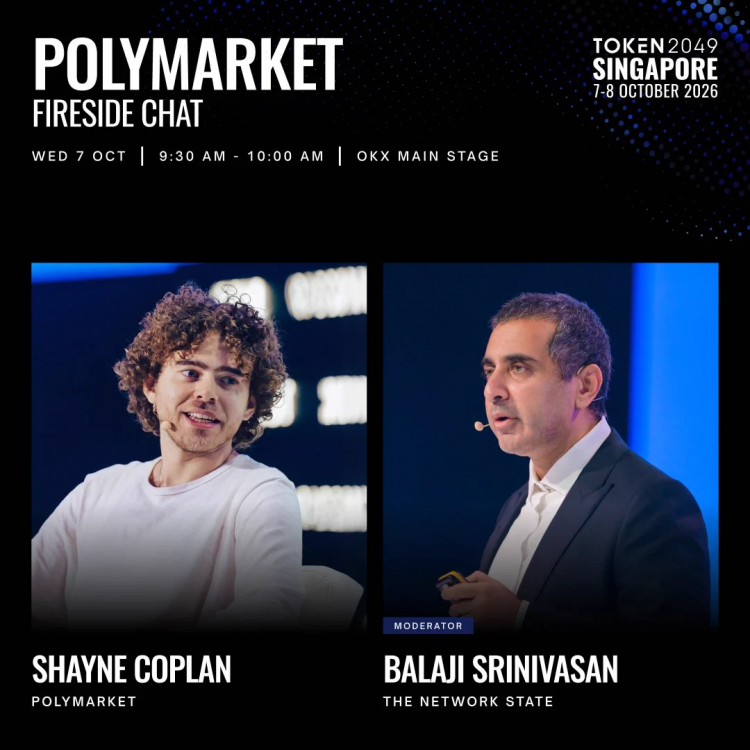
Official TOKEN2049 Singapore 2026 session poster: Polymarket fireside conversation, October 7, 9:30–10:00, OKX main stage
Delta assesses unusual trades by comparing four timelines: contract creation and settlement; each position-entry transaction’s block time and price; funding origins and withdrawal paths; and the first public disclosure of the relevant information. Only when those timelines align can an anomaly be established. The identities behind accounts, information sources and intent cannot be established independently on-chain; platform records and judicial evidence requests are still needed.
5. Conference-week risks: more side events mean more ways to target people
These risks recur during conference weeks but rarely appear in previews. Delta & Capital receives similar requests for help after such events each year. The following scenarios are risk reminders only:
Impersonated side events and invitation links: messages sent in the name of well-known projects may lead users to connect wallets or sign approvals. Access registration through official event pages or organizers’ official accounts.
QR-code giveaways on site: activities at booths, parties and corridors may request unlimited approvals. Use a temporary wallet separated from your main wallet.
Public networks and device security: do not withdraw funds or import private keys over public Wi-Fi. Use a charging-only data blocker with public charging ports.
Post-event airdrop and investment-group pitches: follow-up communication is a high-risk period. Be wary of guaranteed returns or claims of privileged allocations.
If an incident occurs, preserve evidence first: transaction hashes, approval records, the other party’s account and chat records. Report the incident promptly; missing evidence is difficult to reconstruct later.
6. Delta booth: LEVEL 4 · MB4-68
Delta & Capital will exhibit at TOKEN2049 Singapore 2026 at Marina Bay Sands, LEVEL 4 · MB4-68, marked DELTA. Topics available for discussion include address-risk screening for stablecoin receipts and AML/KYT scoring; organizing SOW materials after account restrictions; cross-chain and multi-asset fund-path reconstruction; aligning timelines of unusual trades; and organizing on-chain evidence for reporting cases and assisting judicial inquiries.
| Item | Details |
|---|---|
| Conference | TOKEN2049 Singapore 2026 |
| Dates | October 7–8, 2026 |
| Venue | Marina Bay Sands, Singapore |
| Delta’s role | Exhibitor |
| Booth | LEVEL 4 · MB4-68 |
| Appointment window | October 5–10 |
| Website | deltacapitalhk.com |
Summary
This year’s TOKEN2049 marks a shift from discussing technical feasibility to examining how funds can move safely and compliantly within the existing financial system. Nasdaq brings settlement and regulatory interfaces; Circle brings settlement units and networks. Both require explainable fund paths. Preparing records, supporting documents and source-of-funds materials in advance is more effective than seeking a remedy afterwards. Delta & Capital will bring its timeline-alignment methods, pre-receipt screening process and SOW-material templates to the booth for in-person discussion.
Quick reference: key concepts
Tokenization: recording and transferring ownership of traditional assets, such as shares and fund units, through blockchain tokens.
Stablecoin: an on-chain asset backed by fiat currency or other assets and designed to maintain a reference price. Circle issues USDC.
On-chain settlement: delivery of funds and reconciliation take place on a blockchain, creating publicly verifiable records.
KYT (Know Your Transaction): real-time risk identification for on-chain transactions and addresses, focusing on fund origins and associated risks.
SOW (Source of Wealth): a verifiable chain of evidence explaining how funds were acquired, often requested in account reviews and compliance inquiries.
Address clustering: analyzing fund flows and behavioral patterns to assess whether several addresses are controlled by the same entity.
On-chain forensics: using public blockchain data to reconstruct fund paths and event timelines, producing technical materials for evidence and investigative assistance.
Frequently asked questions
Q1: When and where is TOKEN2049 Singapore 2026, and how large is it?
A: October 7–8, 2026 at Marina Bay Sands, spanning five floors. Official estimates include over 25,000 attendees, more than 7,000 companies from 160-plus countries and regions, 300-plus speakers, over 500 exhibitors and more than 1,000 side events during conference week.
Q2: Which traditional-finance speakers are notable this year?
A: Confirmed speakers include Nasdaq Chair and CEO Adena Friedman and Franklin Templeton CEO Jenny Johnson, alongside representatives of crypto-native organizations including Hyperliquid Labs, Polymarket and Maelstrom.
Q3: What has changed recently for Circle and USDC?
A: Circle launched the Arc mainnet on September 16, 2026, with fees paid in USDC. Circle reported approximately $74.2 billion in USDC circulation as of September 14. This indicates a shift from stablecoins as payment tools toward a settlement layer.
Q4: What security issues should side-event attendees consider?
A: Register only through official channels, use a temporary wallet for QR-code activities, avoid private-key operations or withdrawals on public networks, and be wary of guaranteed-return or privileged-allocation pitches.
Q5: What comes first when an account is restricted or assets behave unusually?
A: Preserve transaction hashes, approvals, platform notices and tickets, chat records and transfer documents immediately. Report the incident according to the relevant jurisdiction’s requirements, and organize source-of-funds materials that can be matched to on-chain records.
Q6: What assistance can Delta & Capital provide?
A: Delta provides technical support for on-chain security and compliance: CEX/DEX account-restriction and risk-control appeals, tracing and evidence organization after theft or fraud, KYT/AML address-risk identification, SOW source reconstruction, and cross-chain and multi-asset fund-path reconstruction. Delta does not promise recovery or unfreezing and does not replace legal procedures.
Q7: How can attendees find Delta?
A: LEVEL 4 · MB4-68 at Marina Bay Sands, marked DELTA. One-to-one discussions can be booked for October 5–10, or visitors can approach the booth directly.
Content support: Delta & Capital provided on-chain security and compliance education for this article. Delta supports appeals concerning CEX/DEX account restrictions, risk controls and freezes, and recovery efforts after crypto theft or fraud. Its blockchain-data analysis and compliance-technology research covers transaction tracing and fund-flow analysis, blockchain-data forensics and on-chain recovery support, real-time KYT/AML risk controls and address-risk identification, KYT/SOW source reconstruction, and cross-chain, multi-asset path reconstruction. It also organizes on-chain evidence and provides technical support for case reporting and judicial inquiries. For further educational material, follow the official WeChat account 德尔泰Delta. This article is educational, offers no recovery or unfreezing promise and does not replace legal procedures.
Risk and compliance notice: This article provides security and anti-fraud education, not investment advice or a guarantee of recovery. Event data comes from public reporting and may change as investigations progress. Virtual-currency-related business is not legally protected in mainland China; readers should remain rational and alert to associated risks.