
On-chain finance and security amid traditional-finance participation
TOKEN2049 Singapore took place at Marina Bay Sands on October 7–8, 2026. Representatives of traditional financial institutions including Nasdaq, Franklin Templeton, BlackRock and Morgan Stanley joined Web3 companies, on-chain infrastructure builders and researchers. Institutional finance, stablecoin payments, asset tokenization and artificial intelligence were important discussion themes.
Delta is a company focused on blockchain security and operated booth MB4-68 on Level 4. During the event, its team discussed practical questions about asset tracing, account restrictions and risk identification with visitors from different countries and regions, while exploring business collaboration and partnership opportunities.
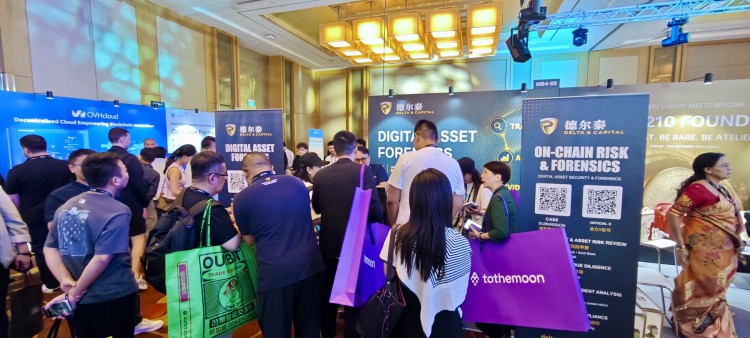
Visitors discussing questions at Delta’s MB4-68 booth
The conference showed that traditional finance and on-chain ecosystems are now discussing concrete trading mechanisms, asset registration, payment settlement and risk management. These topics also highlight source-of-funds evidence, asset control, transaction traceability and security-incident response as foundational issues.
Traditional financial institutions and on-chain participants meet
The participation of Nasdaq Chair and CEO Adena Friedman and Franklin Templeton CEO Jenny Johnson brought traditional financial practice into main-stage discussions. Speaker profiles also included representatives of BlackRock and Morgan Stanley, illustrating the business overlap between traditional asset management, financial-market infrastructure and the on-chain ecosystem.
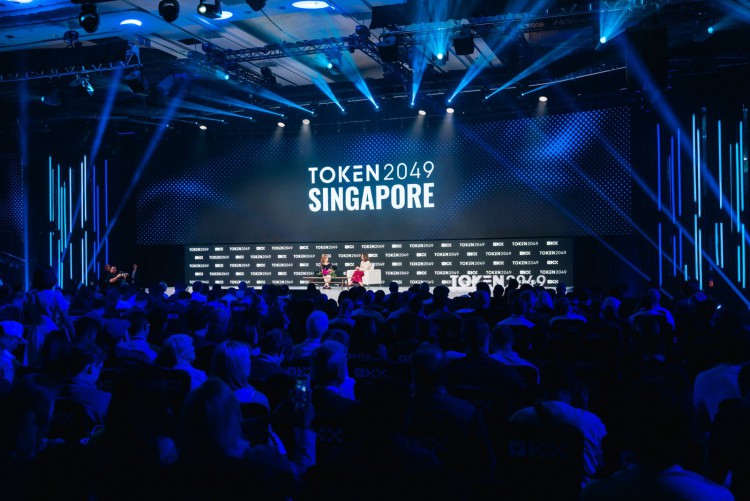
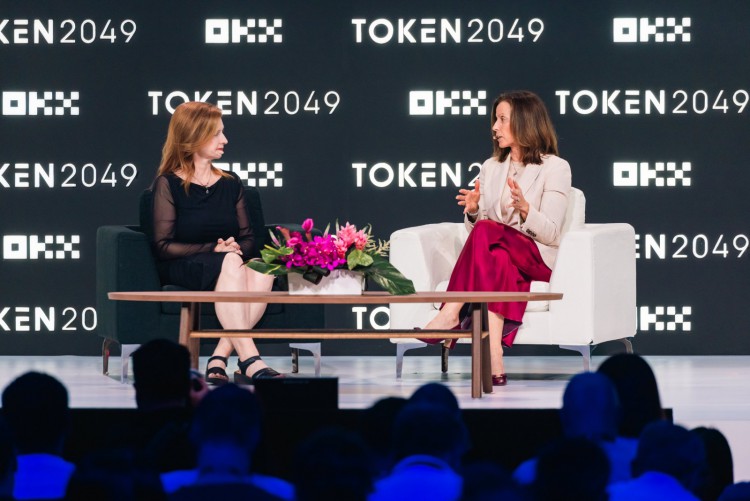
TOKEN2049 Singapore conference and Nasdaq CEO main-stage discussion
In her main-stage conversation, Adena Friedman discussed infrastructure upgrades for around-the-clock trading, including real-time risk management, collateral management and fund movements. Blockchain applications in these areas need to be considered alongside existing institutional trading and operating processes.
Jenny Johnson’s tokenization discussion addressed asset registration, on-chain ownership records and settlement arrangements. Franklin Templeton’s public BENJI materials, for example, state that a transfer agent maintains official fund-share ownership records through a blockchain-integrated system and uses public chains for relevant transactions. Tokenization therefore involves specific registration and operating-infrastructure arrangements.
For Delta, a central issue arising from institutional participation is whether funds, accounts, ownership records and business context remain verifiably connected. Security analysis requires both an understanding of transaction paths and identification of control permissions and evidentiary requirements in actual business operations.
Asset tokenization and stablecoin payments remain in focus
Asset registration and on-chain market infrastructure
The agenda included institutional DeFi, tokenized markets and on-chain financial infrastructure. Core questions concerned how assets enter on-chain systems, how different records correspond, and how trading and settlement connect. Traditional financial institutions and crypto-native teams discussed these issues directly.
For security research and incident investigation, token-transfer records, account control and underlying asset arrangements must be examined separately. On-chain flows provide transaction facts; acquisition grounds, business uses and the roles of relevant parties require corresponding supporting materials.
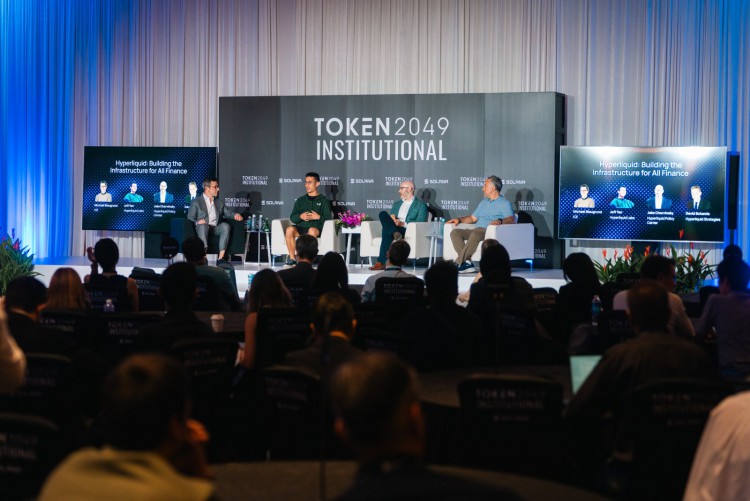
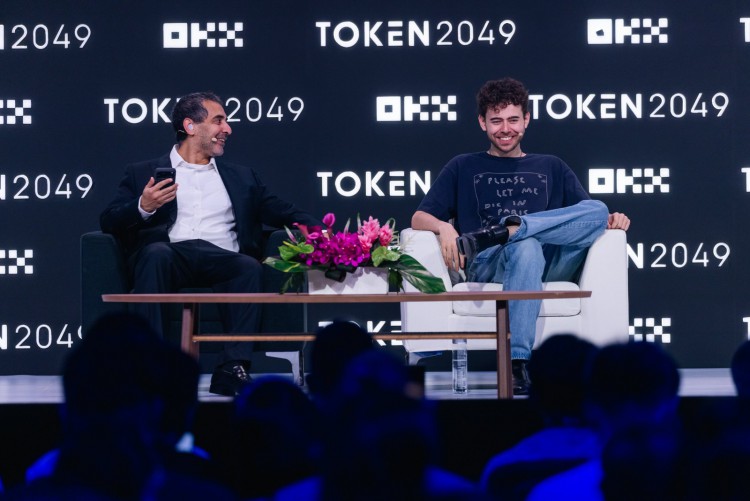
Institutional-stage and prediction-market discussions
Stablecoin payments and programmable fund flows
Stablecoin discussions focused on payment systems and on-chain fund-flow applications. As payments, trading and cross-platform businesses connect, verification of funding origins, counterparty risks and unusual flows becomes directly relevant to operations. Security work needs to connect records consistently across networks, addresses and business stages.
Polymarket founder Shayne Coplan and Balaji Srinivasan discussed prediction markets and information pricing, reflecting continued exploration of information sources, trading mechanisms and trustworthy records in on-chain applications.
Security questions around AI and on-chain finance
Eric Trump and the World Liberty Financial team discussed the relationship between AI agents and payments, including autonomous transactions’ requirements for crypto wallets, digital payments and programmable money. Sessions on AI on-chain trading, agent trading and privacy finance also examined the intersection of automation and financial applications.
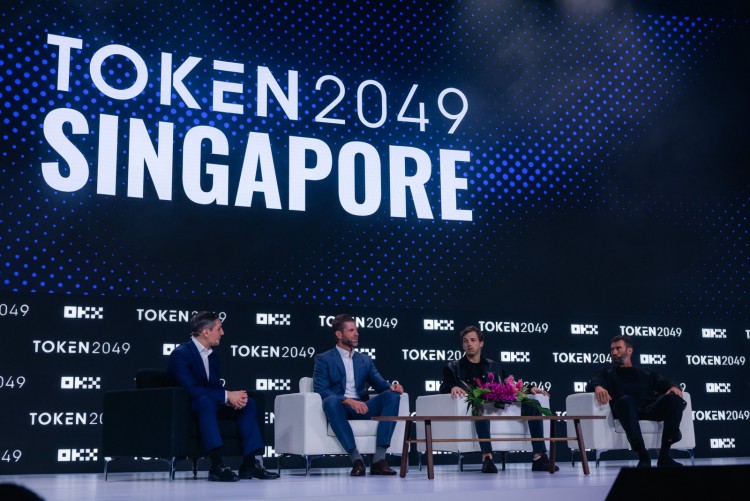
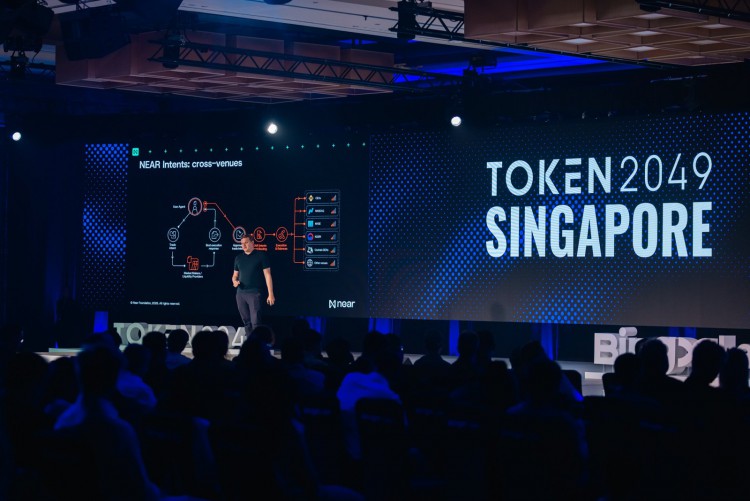
World Liberty Financial conversation and AI/privacy-finance session
NEAR Protocol co-founder Illia Polosukhin presented privacy-by-default approaches to AI and finance. For automated systems that may transact on users’ behalf, relationships between identity, permissions, control of funds and operating records directly affect risk identification and subsequent investigation.
Verifiability and risk management are shared requirements
Tokenized assets must correspond to registration and business arrangements; around-the-clock markets need timely risk controls; and automated trading requires traceable authorization and execution records. These scenarios depend on a verifiable information foundation and give on-chain security and evidence analysis specific practical applications.
Regulatory roundtables covered local rules and regulatory sandboxes. Cross-border operations require clarity around technical records, business facts and the responsibilities of participating parties. Evidence preservation and professional cooperation must also continue after a security incident.
Delta focuses on translating these topics into practical investigative and analytical requirements: identifying fund paths, reviewing address risk, reconstructing source materials and preserving incident evidence, so that technical conclusions can support further professional review.
Delta contributes on-chain forensic capabilities to international security discussions
At MB4-68, Delta showcased capabilities spanning tracing, analysis, evidence collection and response, centered on blockchain security and on-chain forensics. Discussions covered cross-chain tracing, wallet and counterparty-risk review, platform-account restriction reviews, and source-of-funds and transaction-background materials.
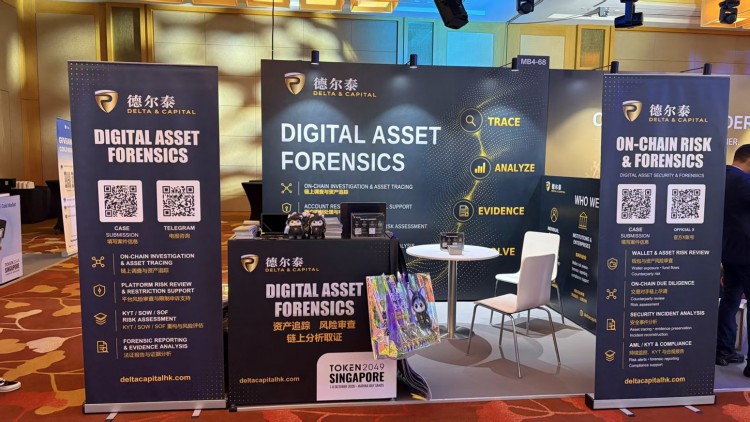
Delta’s TOKEN2049 Singapore booth
Visitors from different countries and regions included institution and platform personnel seeking professional collaboration, as well as users bringing specific problems. Discussions focused on appeal materials after account restrictions, stolen or fraudulently obtained assets’ paths, tracing after cross-chain transfers and source-of-funds evidence. The team explained analytical approaches, preparation requirements and possible subsequent cooperation in light of specific needs.
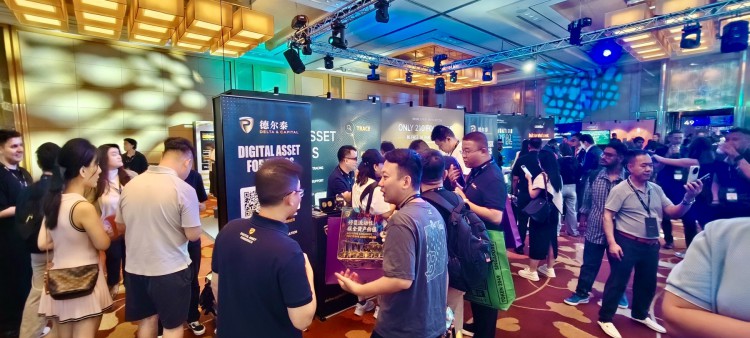
Delta’s booth and nearby discussions
Delta explained its service value through concrete business scenarios, connecting its capabilities with visitors’ actual problems. Face-to-face communication introduced international participants to Delta’s scope, methods and workflow and laid a foundation for professional trust.
Connecting risk identification and incident response through professional analysis
Delta’s work covers on-chain risk identification, security-incident investigation and response cooperation. It analyzes transactions, address relationships, account materials and real business context, producing verifiable fund paths, factual explanations and evidence materials as technical support for clients and relevant professionals.
Cross-chain tracing and on-chain forensics
For stolen or fraudulently obtained assets and unusual flows, Delta organizes key transactions, timelines and upstream/downstream address relationships, analyzing splitting, consolidation, swaps and cross-chain movements. Cross-chain investigations compare records on both sides, protocol interactions and corresponding asset changes, identifying confirmed paths, unresolved nodes and tracing boundaries. Similar amounts or address labels alone are not treated as proof of linkage.
Platform risk reviews and restriction-removal support
For platform-account restrictions and source-of-funds reviews, Delta compares account statements, on-chain records and business materials supplied by clients to examine funding origins, transaction context and risk associations. It helps organize appeals and additional evidence. SOF and SOW are examined separately, while KYT risks are assessed against specific transactions, giving submissions a clear factual basis and reproducibility.
Asset-recovery cooperation and evidence support
In recovery-related work, Delta analyzes fund destinations, organizes key transactions and address evidence, prepares investigation reports and supports technical communication, coordinating with platforms, lawyers and other professionals as appropriate. Materials distinguish observable on-chain facts, analytical judgments and matters needing additional evidence. Freezing, restriction removal and recovery outcomes are decided by the relevant parties under their own procedures.
Wallet and counterparty-risk review
For routine operations and business cooperation, Delta reviews wallet-address exposure, fund flows, counterparties and unusual transactions. Analysis of key funding relationships and historical interactions helps clients identify risks requiring further examination and informs business decisions and ongoing monitoring.
From booth discussions to ongoing professional cooperation
During the conference, the team also joined industry events including OKX NOW, Dashu Finance, Network State and Vibrez. After the exhibition, Delta continued following up institutional contacts, client inquiries and partnership needs, turning discussions into further technical cooperation and business connections.
Two days of booth discussions and several industry activities brought Delta into contact with international platform practitioners, security providers, prospective clients and partners. The team exchanged contact details around specific questions, organized requirements and continued post-event communication to develop professional cooperation.
The mascot Debao and customized tote bags became distinctive elements of booth interaction. Visits, conversations and branded materials introduced attendees to Delta, while professional service discussions connected brand recognition with fund tracing, forensic analysis and security response. Booth presentation and business communication together increased recognition among international participants and helped establish ongoing trust.

Visitors displaying Delta’s customized tote bags
As institutional participation grows and on-chain assets and applications expand, security investigations and evidence analysis become increasingly important. Delta will continue using verifiable analysis and professional cooperation to help clients address complex blockchain-security problems.
About Delta: Delta & Capital was established in 2018 and is operated by Hong Kong’s Deltai Capital Limited. Core capabilities include transaction tracing and fund-flow analysis; blockchain-data forensics and on-chain recovery support; real-time KYT/AML risk controls and address-risk identification; SOW source reconstruction; and cross-chain, multi-asset path reconstruction. It also organizes on-chain evidence and provides technical support for reporting cases and judicial inquiries. Website: deltacapitalhk.com. Official WeChat account: 德尔泰Delta.
Risk and compliance notice: This article introduces the institution and provides risk education. It is not investment advice, legal advice or security certification and does not guarantee restriction removal, unfreezing or recovery.