
1. Institutional background and scope of work
Delta & Capital began in 2018 and is operated by Hong Kong’s Deltai Capital Limited. It is a blockchain-security institution focused on digital-asset forensic analysis, on-chain tracing and security compliance. Its team combines on-chain forensics, AML compliance, cross-border coordination and collaborating law firms. Cases use publicly verifiable blockchain data to reconstruct fund flows, with materials distinguishing verified facts from analytical judgments for institutional review.
To date, Delta has successfully concluded more than 1,000 cases, assisted in restoring over $85 million in assets, and handled cases across more than 37 jurisdictions. Its fastest recorded restriction-removal case took 24 hours.
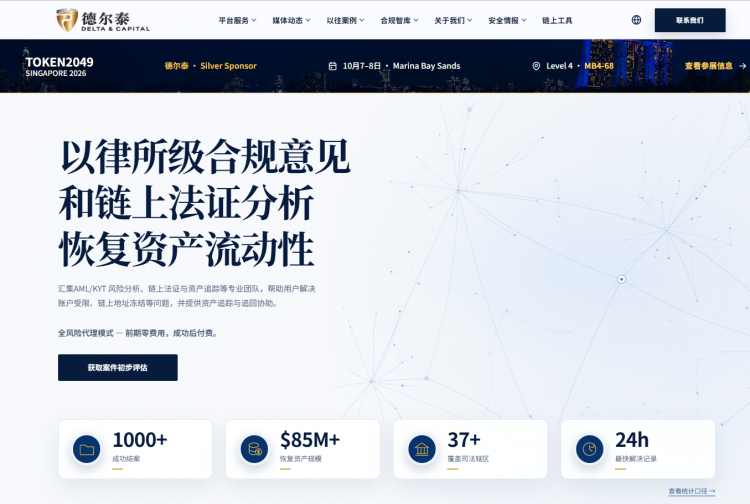
Delta will exhibit at TOKEN2049 Singapore this year and discuss questions on site. Scan the code to arrange a meeting.

2. TOKEN2049 Singapore 2026
TOKEN2049 is currently the largest crypto-industry conference. This year’s Singapore edition will be its largest yet, occupying five floors of Marina Bay Sands: 25,000-plus attendees, 7,000-plus companies, 300-plus speakers and over 500 exhibitors from more than 160 countries and regions. Over 60% of attendees are C-level executives, and conference week includes more than 1,000 side events.
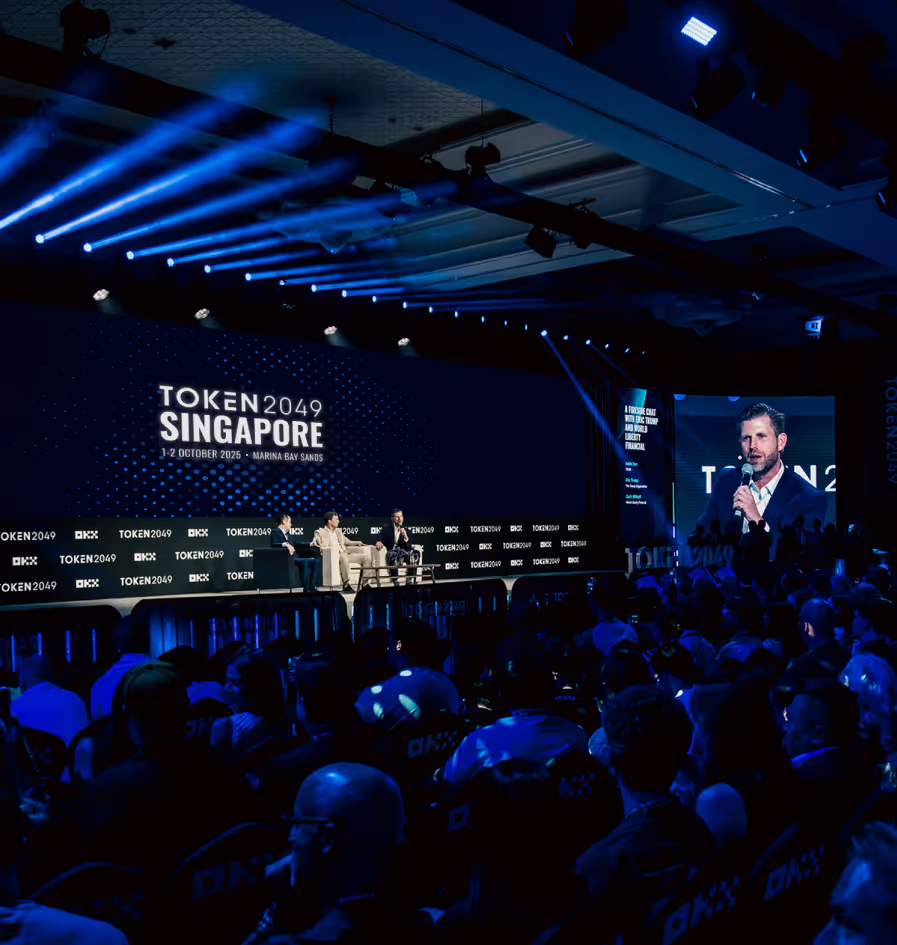
The speaker lineup is notable. Alongside crypto-native figures such as Vitalik Buterin of Ethereum, Polymarket founder and CEO Shayne Coplan, Hyperliquid Labs CEO Jeff Yan, Maelstrom CIO Arthur Hayes and Balaji Srinivasan, it includes Nasdaq Chair and CEO Adena Friedman, Robinhood’s Vlad Tenev and F1 world champion Lando Norris. Sponsors and exhibitors include Circle, TRON, Coinbase, Bitget, BingX and Fireblocks. Traditional finance, stablecoin issuers and infrastructure providers appearing together increase the prominence of compliance and risk-control discussions.
In addition to the October 7–8 main conference, the week includes supporting activities:
October 6–8 | TOKEN2049 Origins Hackathon: 36 hours from idea to a working product, for developers and startup teams.
October 7–8 | NEXUS startup competition: the website says the previous edition received about 500 applications, with 10 finalists pitching on stage.
October 7–8 | Startup Village: a startup exhibition area for investors and industry decision-makers.
October 9 | AFTER 2049 official closing party: Marina Bay Sands SkyPark, 57 floors above ground, with Claptone among the performers. The first ticket round is sold out; the second opens on September 24.
Throughout conference week | Over 1,000 side events: stablecoins, institutional participation, payments and compliance are among the most frequent themes.
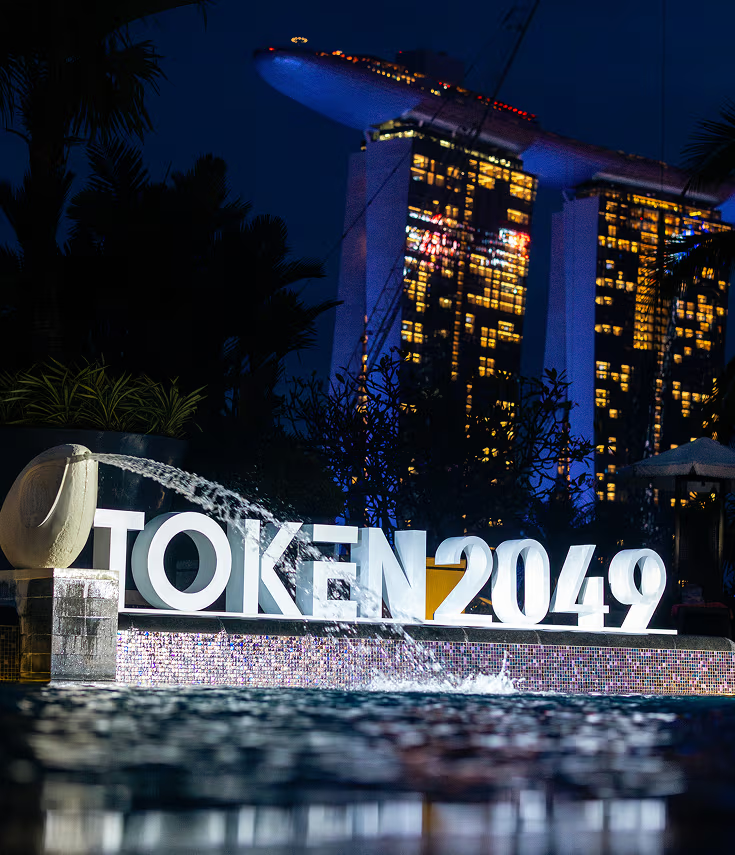
The exhibition spans several floors and discussion time is limited, so visitors should bring specific questions and materials. Crowded settings also attract impersonation, phishing and fake customer support; verify official channels before any cooperation or communication.
3. Three issues in focus this year
Unlike earlier editions centered on narratives and fundraising, this year’s discussions lean toward asset security and compliance for incoming funds. Several public datasets reflect the shift:
Security-incident scale: more than $1 billion was stolen in H1 2026, with the highest half-year incident count on record. Source: Blockaid’s H1 2026 security report.
Loss distribution: Ethereum accounted for approximately $332 million and Solana approximately $326 million in H1, with Solana losses rising sharply year over year. Source: Blockaid.
Attack concentration: 207 incidents were recorded in H1; North Korea-linked groups were associated with approximately $643 million, around two-thirds of worldwide stolen funds. Source: TRM Labs.
Stablecoin freezing: as of July 26, 2026, 9,597 USDT addresses were blacklisted, with approximately $5.69 billion frozen. Source: BlockSec on-chain statistics.
Differences between issuers: approximately $109 million was frozen by Circle across about 372 addresses, substantially below Tether’s scale. Source: compilation of public freezing data.
The three questions asked most frequently are:
First, preventing asset theft. Large losses remain concentrated in private-key leaks and approval phishing, while signature phishing and address poisoning affect the greatest number of users. Address poisoning exploits the habit of copying addresses from transaction history and has already caused individual losses at the million-dollar level.
Second, address risk when receiving stablecoins. Expanding blacklists increase the likelihood of restrictions following incoming funds in OTC, payment and receipt scenarios. Once an issuer freezes an address, release depends on procedures and supporting materials.
Third, compliance barriers accompanying institutional capital. Traditional financial institutions and stablecoin issuers feature heavily in TOKEN2049 agendas and side events, bringing stricter incoming-funds reviews. Source-of-funds explanations, counterparty due diligence and Travel Rule information exchange are moving from optional measures to prerequisites for account opening and large deposits.
These questions point to the same capability: clarifying on-chain fund flows and producing materials a third party can review. Delta will offer the following two practical checklists at its booth.
Three basic precautions before an incident
Review wallet approvals regularly and revoke unused unlimited approvals. Separate large holdings from everyday interaction wallets and use a hardware wallet for the larger holdings.
Use a personally maintained address book rather than copying addresses from transaction history. Test a new large transfer with a small amount first, and verify the complete address rather than only its beginning and end.
Screen counterparties’ addresses before receiving funds, especially in OTC, service-payment and large off-exchange transactions. Retain business-background materials for later source-of-funds reviews.
The first 72 hours after theft
Preserve evidence first: transaction hashes, the affected address, transfer-out times and suspicious approvals. Do not begin by clearing wallet history.
Stop receiving further funds at the affected address and revoke known malicious approvals to reduce further losses.
Report the incident promptly and organize on-chain paths and timelines in parallel. Funds may reach mixers or cross-chain routes within hours; earlier preparation preserves more verifiable paths.
Be wary of unsolicited teams that guarantee recovery and request advance payment or seed phrases. Theft victims are especially vulnerable to this secondary fraud.
4. Four main service lines for individuals
Account restriction-removal support: investigate restriction triggers and organize factual explanations and appeal materials. Common scenarios include withdrawal locks, AML-model triggers and restrictions arising from judicial assistance requests.
Address restriction-removal support: examine stablecoin-address risk exposure and organize fund-path explanations and appeals. Common scenarios include issuer restrictions and passive involvement in stolen-fund flows.
Tracing stolen or fraudulently obtained assets: follow funds and preserve key-address and transaction evidence. Common scenarios include malicious approvals, private-key leaks, investment fraud and mixer transfers.
SOW / SOF / KYT source-of-funds evidence: clarify wealth origins, funding origins and on-chain risk exposure, reconstructing a verifiable evidence chain. Common scenarios include requests from exchanges, banks or issuers to explain funds.
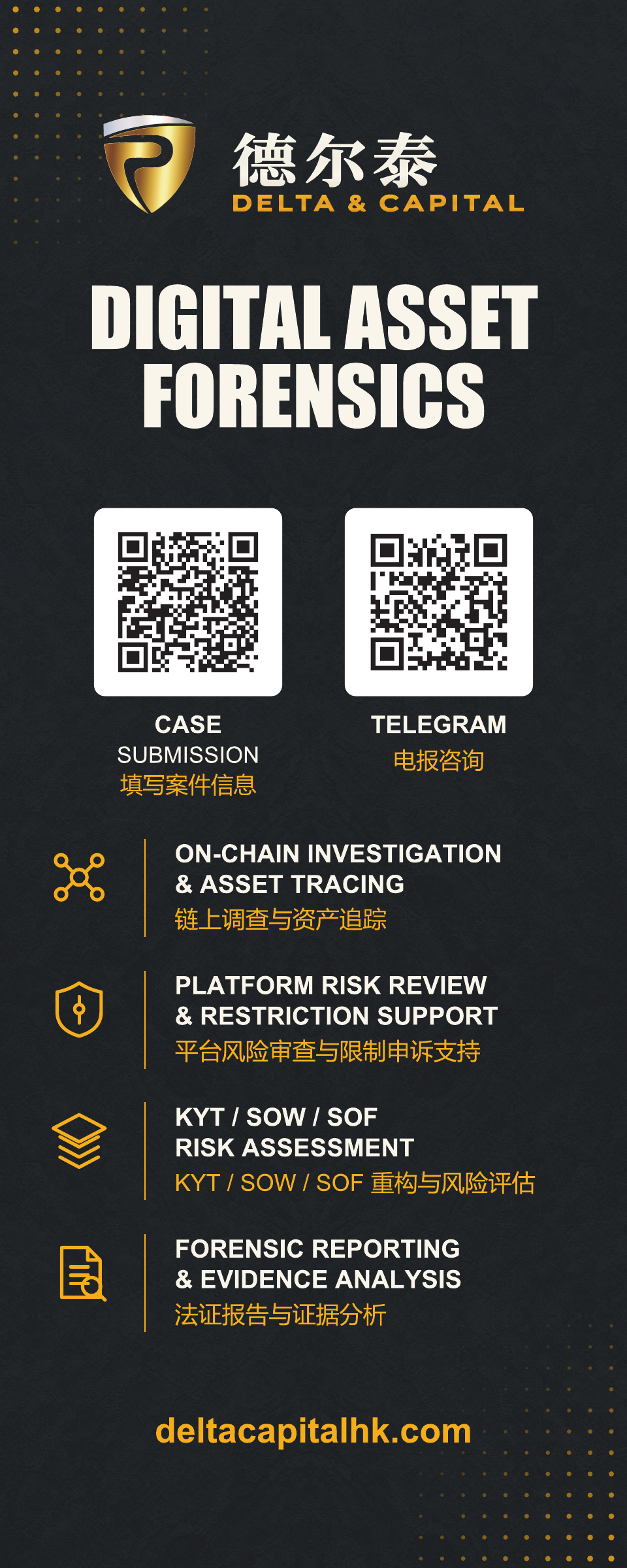
5. Services for institutions and projects
For exchanges, OTC businesses, payment providers, funds and project teams, Delta provides capabilities both before funds arrive and after incidents:
Wallet and asset-risk review: clarify holdings, multisignature arrangements and approvals, identifying control and transaction risks requiring attention.
On-chain counterparty due diligence: review counterparties, projects and associated addresses for fund relationships and risk exposure, distinguishing verified information from outstanding questions.
On-chain monitoring and anomaly notices: monitor large transfers, unusual fund flows and changing risk associations against agreed addresses and rules.
Security-incident analysis and response support: reconstruct timelines, trace funds and organize evidence following an incident to support subsequent handling.
AML / KYT and compliance reports: ongoing monitoring and forensic reporting for internal reviews and compliance communication.
Core deliverables fall into three categories: risk maps and findings lists covering wallets, permissions and transaction relationships, with evidence and unresolved matters; forensic reports covering events, fund paths and supported conclusions; and review/communication packages containing transaction appendices, source-of-funds materials, evidence indexes and additional requirements. On-chain analysis does not replace code audits or security certification.
6. A four-step case workflow
On-chain analysis: clarify address, transaction and cross-chain records, presenting fund flows and key nodes. Outputs include fund-path diagrams, transaction details and event timelines.
Transaction verification: compare platform notices, client materials and blockchain records, separating verified facts from analytical judgments. Outputs include verification results, source-of-funds correspondences and requests for additional evidence.
Forensic report: document scope, methods, findings and limitations in a reproducible form. Outputs include a forensic report, transaction appendices and an evidence index.
Submission and communication: assist with materials and follow up on additional-document requests under the relevant review or response process. Outputs include submission packages, supplementary-document lists and communication records.
These steps must not be performed out of order. In practice, incomplete materials or inconsistent timelines are more common obstacles than technical difficulty. Delta identifies data gaps and distinguishes verified facts from analytical judgments in its reports.
7. Selected anonymized case records
The following are selected publicly disclosed anonymized Delta cases. Amounts and durations reflect actual case records.
European local jurisdiction (DE), 9,600,000 USDT: restrictions successfully removed in 74 days.
Dual jurisdictions (NZ–HK), 1,220,000 USDT: restrictions successfully removed in 240 days.
Cross-border law-enforcement assistance (HK–US), 1,034,253 USDT: restrictions successfully removed in 225 days.
Mixer contract (EVM), 119.78 ETH: successfully recovered in 420 days.
Cross-chain laundering (BSC–TRON), 295,590 USDT: successfully recovered in 365 days.
Cross-chain transfer (EVM–TRON), 108,743 USDT: successfully recovered in 330 days.
A straightforward risk-control review usually takes several business days, while cross-border judicial disputes can take months or more than a year. Evidence quality directly affects the available options, which is why Delta emphasizes preserving evidence before discussing handling.
8. Fees and service boundaries
Fees: qualifying cases may use a results-based arrangement with no upfront fee. Enterprise security and on-chain reporting fees depend on the case and the amounts involved, subject to the formal service agreement.
Report use: reports reference FATF’s risk-based principles, publicly verifiable blockchain data and mainstream AML/KYT methods. They can provide technical support for appeals, legal review, reporting cases and judicial inquiries; receiving institutions may independently verify them.
Privacy: case materials are handled on a minimum-necessary basis, with access controls and retention management.
9. Meet Delta: LEVEL 4 · MB4-68
Conference: TOKEN2049 Singapore 2026
Dates: October 7–8, 2026
Venue: Marina Bay Sands, Singapore
Delta’s role: Silver Sponsor
Booth: LEVEL 4 · MB4-68
Discussion topics: theft prevention and approval checks, address-risk screening, account and address restrictions, SOW preparation, and tracing stolen assets
Website: deltacapitalhk.com
The booth is in the Level 4 exhibition area, marked DELTA&CAPITAL. Traffic is heaviest around morning main-stage sessions and before afternoon side events. Visitors needing more time can book in advance; meetings can be arranged from October 5 to 10.
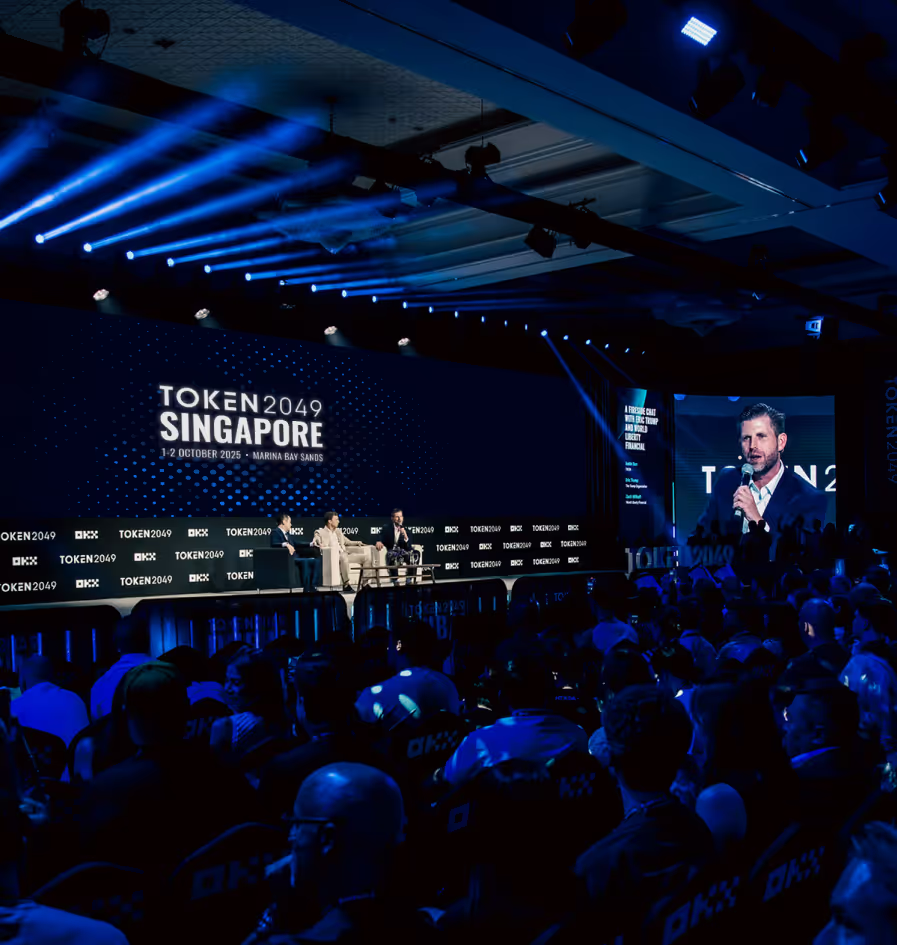
A previous TOKEN2049 conference (the OKX main stage in 2025)
10. Verify Delta’s official identity
Impersonation is common in this field, so verify channels before communicating. Delta’s unified verification page is deltacapitalhk.com/verify, which is authoritative for all contact information. Public channels include Telegram @DeltasupportHK, official X account @delta_team_hk, case adviser @web3chenmo and support@deltacapitalhk.com.
Summary
Both theft-incident counts and the scale of stablecoin freezes rose in H1 2026, making them important conference topics. Delta will attend TOKEN2049 Singapore 2026 as a Silver Sponsor at LEVEL 4 · MB4-68. Visitors are welcome to bring specific questions on theft prevention, address risk and source-of-funds evidence.
Quick reference: key concepts
On-chain forensics: reconstructing fund paths and event timelines from public blockchain data to produce reproducible technical evidence.
KYT (Know Your Transaction): identifying risk in on-chain transactions and addresses.
SOW / SOF: source-of-wealth and source-of-funds evidence, central to risk-control reviews and appeals.
FATF risk-based principles: the risk-oriented regulatory approach of the international anti-money-laundering standard-setter.
Mixer demixing: matching inputs and outputs and inferring paths for funds processed through mixing contracts.
Travel Rule: compliance rules requiring virtual-asset service providers to transmit originator and beneficiary information with transfers.
Signature phishing: inducing users to sign malicious transactions or unlimited token approvals, enabling asset transfers without obtaining the private key.
Address poisoning: creating lookalike addresses and sending small transfers so that a target later copies the wrong address from transaction history.
Frequently asked questions
Q1: What is Delta’s role at TOKEN2049?
A: Silver Sponsor of TOKEN2049 Singapore 2026, LEVEL 4 · MB4-68 at Marina Bay Sands, open October 7–8.
Q2: When was Delta established and where is its operating company?
A: It began in 2018 and is operated by Hong Kong’s Deltai Capital Limited. The team covers on-chain forensics, AML compliance, cross-border coordination and collaborating law firms.
Q3: What problems does it address?
A: Four main lines: account restrictions, stablecoin-address restrictions, tracing stolen or fraudulently obtained assets, and SOW/SOF/KYT evidence. Institutional services also include wallet and asset-risk review, counterparty due diligence, incident analysis and AML/KYT reporting.
Q4: Is an upfront fee required?
A: Qualifying cases may use results-based fees with no upfront payment. Scope, success criteria and amounts are governed by the formal agreement.
Q5: Are the reports useful?
A: They follow FATF risk-based principles and mainstream AML/KYT methods and can support exchange appeals, legal review, case reporting and judicial inquiries. Receiving institutions can verify individual items.
Q6: Can an account be reviewed again after restrictions are removed?
A: Yes. Exchanges, banks and issuers independently assess subsequent transactions under their own policies. Delta can help explain historical risk associations and prepare review materials, but cannot control the platform’s decisions.
Q7: How can I confirm I am contacting the official team?
A: Use the channels listed on deltacapitalhk.com/verify.
Q8: What is most urgent immediately after theft?
A: Preserve evidence before tracing: transaction hashes, the affected address, transfer-out times and approvals. Revoke suspicious approvals, stop further receipts at the affected address and report the incident promptly. See the first-72-hours checklist in Section 3.
Risk and compliance notice: This article is not investment advice, legal advice or security certification, and does not guarantee the removal of restrictions, unfreezing or recovery.